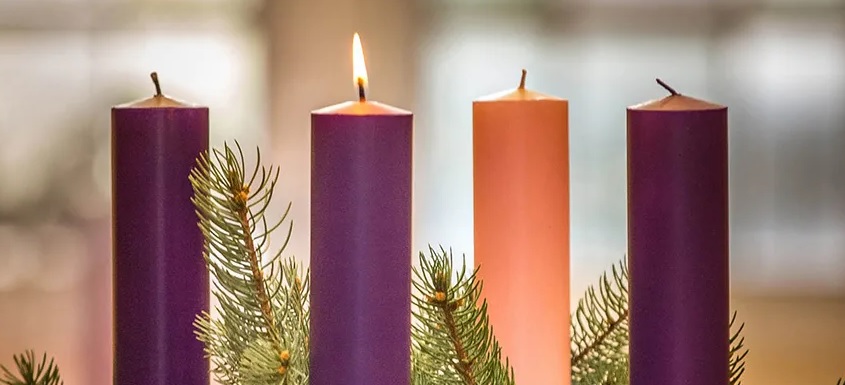
Anything but grace?

“For what greater grace could have dawned upon us from God, than that him who had only one Son, made him the son of man, and so in turn made the son of man a son of God. Ask yourself whether this involved any merit, any motivation, any right on your part; and see whether you find anything but grace!”

These are the words of St Augustine of Hippo in the Office of Readings for Christmas Eve. As we draw at last to the end of Advent, St Augustine invites us to consider the why of Christmas.

The Adoration of the Child is depicted in this 17th-century painting by Dutch artist Gerard van Honthorst.

The first sentence of that quote can seem quite bewildering, but it is a rephrasing of the fundamental Christian reality: God sent his only Son into the world as a man, to redeem all of mankind to himself. In the words of St Paul in his letter to the Galatians: “God sent forth his Son, born of a woman… so that we might receive adoption as sons.” The Nativity of the Lord which we are about to celebrate is the beginning of this mystery; the Son coming to earth. We must of course wait until the Easter Triduum to celebrate its terrible and glorious fulfilment in the Passion, Death and Resurrection of the Lord.

This is the root of our faith, but as St Augustine points out, we must ask why? Psalm 8 asks just this question of the Lord: “What is man that you should keep in mind, mortal man that you care for him?” What has mankind done to warrant the coming of our God to earth, on that first Christmas, or this one, or any in between? St Augustine offers us an answer in a roundabout way:

Nothing.

Even if the world had the united will to earn salvation, to earn the presence on earth of our Redeemer, there is not enough wealth in the world to buy his favour. From the Lord’s perspective in Psalm 49 (50): “If I were hungry, I would not tell you, for I own the world and all it holds.” In short, there is no thing that we can offer to God.

So what can we offer, if not things? That same psalm gives us an answer: “Pay your sacrifice of thanksgiving to God… a sacrifice of thanksgiving honours me and I will show God’s salvation to the upright.” Many of us will sing the carol In the Bleak Midwinter over the coming days; the final line of that hymn gives us the same answer: “what I can I give him; give my heart.” The sacrifice which the Lord asks of us is our heart-felt love. It is by loving him that we will find salvation, and that begins tonight, with the remembrance and celebration of a helpless child, born to humble parents two millennia ago.

St Augustine challenges us one last time with his final words. We can and should make the free choice to worship God; but he did not come as our Redeemer in repayment for love which had been given, nor to leave us in his debt, with love to be offered later. He came because he loves us, and with a more perfect love than we can imagine. In his love God showers us with graces of all kinds, but none more so than that which began in a stable of Bethlehem, with the child named by St Gabriel as Emmanuel – God-with-us.

Mankind did not, and does not, deserve what St John called the “love the Father has given us, that we should be called children of God.” When we truly consider the mystery of the Incarnation which we are about to celebrate, can any of us “find anything but grace?”
We are a people of hope

For many years, as a child and an adult, I found hope to be the most difficult of the theological virtues. I could accept the role of faith in my life, and the need for charitable love was always evident, but an understanding of hope always alluded me. At its best it seemed a different form of faith – we trust that God will give us what we need, when we need it, therefore we do not need to hope if we have faith in the Lord’s goodness. At its worst, it seemed sinful – it is possible, even easy, to hope for things which are most definitely not good for us.

In my Advent reflections over the years I have come to appreciate the example of John the Baptist as a person of hope. This is an example which we should all seek to follow, for it is one of selfless hope. When we know something that others do not, we are often tempted to keep this knowledge as our secret, or to drip-feed it to gain other people’s interest in, and even acclaim for, the gossip that we have to share. The knowledge of Christian hope must not be like this. Rather, it’s sharing is like passing the light from a candle. We lose nothing in the sharing – our light, our hope, burns as brightly as ever. In fact, we are now one among a pair, a dozen, a hundred beacons of hope; which together light up the darkness of our world more and more, as we share the hope we have in Christ.

An ancient writer, Origen, wrote that he believed “the mystery of John is still being fulfilled in the world, even today.” John’s mystery is now the Church’s mission. We pass on the light of hope in Christ to those around us, and in this we can have no greater model than John, whom Christ himself acclaimed: “of all the children born of women, there is no one greater.”

The paradox of Christian hope is that our hope has already been fulfilled. We know the end to which the light of our hope leads us. We are destined for a heavenly home if we will but take up our cross in this dark world, and follow him who is the Alpha and the Omega, the beginning and end of all things. In this he is the embodiment of Christian hope, and with that in mind I will finish with the words of St John Henry Newman’s hymn:

Lead kindly light, amid the encircling gloom. Lead thou me on. The night is dark, and I am far from home. Lead thou me on.

A voice cries in the wilderness

John the Baptist has been a sadly under-rated saint in recent times. He was in his father’s words as recorded in Luke’s Gospel: “a prophet of God the most high,” he “went ahead of the Lord, to prepare his ways before him.” He was the fulfilment of part of the prophecy of Isaiah – the voice which cries in the wilderness, “prepare a way for the Lord, make his paths straight.”

An ancient hymn of John the Baptist called Ut Queant Laxis contains a wonderful musical nod to his role as the fore-runner of Christ. Each successive phrase in that hymn begins a note higher than the last, escalating higher and higher, just as the scriptures see John the Baptist being the sign to something higher than himself – the Lord who was to come.

For the musicians among us, that same hymn is the origin of the solfege scale made famous by the Sound of Music – do, re, mi, fa, sol, la, ti, do. Perhaps take a moment to remember St John the Baptist over Christmas if you find yourself one afternoon watching the inevitable showing of Julie Andrews and the Von Trapp children prancing around an Alpine meadow.

We should see John the Baptist as a great prophet and saint of the Church. And in him we should see an example to us in our day. When you think of when you imagine the wilderness in which John lived? What do you picture? What comes into your mind’s eye? Perhaps a desert or a vast empty plain. More important than the image – is anything happening there? Probably not. Perhaps at most a whisp of sand blowing in a breeze or a camel baying in the distance?

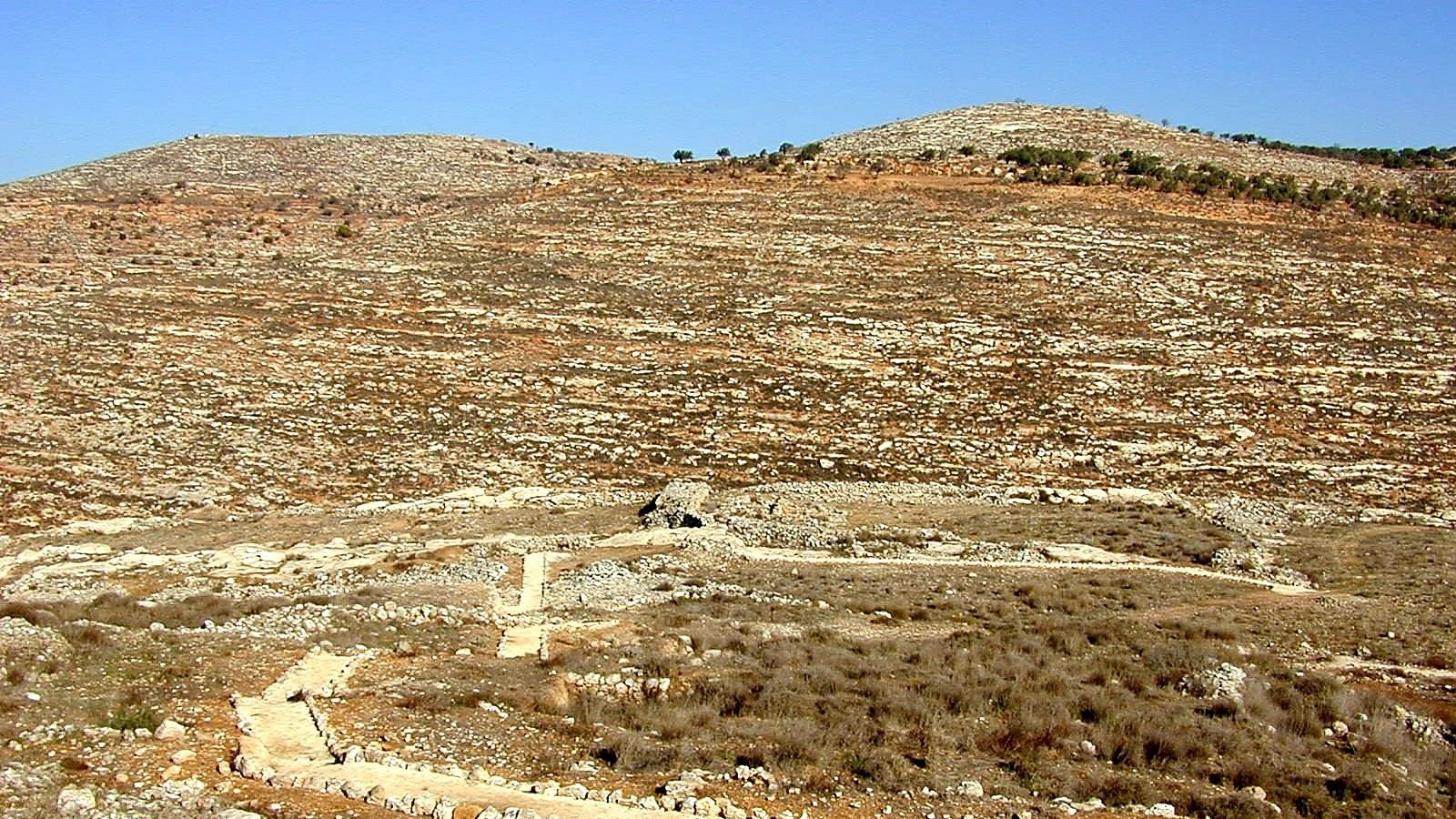
But in truth the wilderness of the holy land is not a calm and peaceful place. It gets extreme heat in the day and cold in the night. Strong winds drive sandstorms that will scour the skin. There is a real danger of starvation or thirst. There are animals that will kill you; some obviously, like wolves, others subtly, like snakes and scorpions. Yet despite all this John managed to live a good and upright life.

Our secular world is very much a spiritual wilderness, and like the literal wilderness of John the Baptist there are many threats to our living good and upright lives:

Individualism – seeing ourselves above all else.

Materialism – seeing possessions as the most important thing in life.

Consumerism – finding happiness almost exclusively in the purchase of goods.

We can all see some of these things in ourselves at times, I’m sure; and it is very easy to get caught up in them as we get ready for the Christmas festivities. Of course, it is right to celebrate the Incarnation and keep the great feast of Christmas as a joyful occasion. But in the next few weeks as you prepare for those celebrations, also remember to follow the example of St John:

Do not be afraid to be a voice that cries into the spiritual wilderness of our world. Do not be afraid to tell people of Christ, of the real meaning of Christmas, of his death and resurrection, of the redemption of the world. If we all do this, proudly and fiercely, then truly, in the words of Isaiah, “all mankind shall see the salvation of God.”

A new year, a new hope

First Sunday of Advent 2022 (Year A)

All of my family either love, or have at some point loved, the children’s toy Lego. A few years ago, my wife and I took our children to Legoland Windsor to stay for a night in one of their hotels, as part of my daughter’s birthday celebrations. We didn’t tell the children where we were going or what for; we just bundled them into the car not long before dawn and headed off on the motorway. As we drove, the slowly lightening sky gave way to dawn and the children’s eagerness for the adventure grew. We kept the secret right up to the moment we pulled into the park and saw the sign topped by giant Lego bricks. At this point there was smiling and bouncing all round in the back seat, and as those who are parents will know, there is nothing better than seeing unadulterated happiness on the faces of your children. It was a very, very good trip.

That trip began a new year of my daughter’s life. Today, the First Sunday of Advent, we open a new year in the life of the Church. We begin in a similar way – we have been roused in the darkness and started onto our Advent journey. In the words of our second reading, ‘the night is almost over, it will be daylight soon.’ Nowhere is this beautiful analogy of darkness giving way to light clearer than in the Rorate masses of Advent. If you have the chance to attend one or more of these masses this Advent, I strongly recommend them. They take place in the darkness immediately before dawn, and if timed right one enters the church in darkness, with candles often providing the only light, and then leaves into the brightness of the winter’s morning.

Unlike the children though, we know the wonderful end of our journey: Christmas, certainly, and our great commemoration of the Incarnation; but in these first weeks of Advent, we consider in a particular way the coming of the Lord at the end of time. Our Gospel contains stark language from Jesus: ‘of two men in the fields one is taken, one left; of two women at the millstone grinding, one is taken, one left.’ Jesus is not suggesting a fifty-fifty split; he is explaining that there will be a suddenness to his return.

There is an old episode of the Simpsons, in which Bart explains to a minister that he was hoping to live a life of sin followed by a ‘presto-chango death-bed repentance.’ The minister argues that living a good life means he receives ‘full coverage’ in the event of a sudden death. It is the Simpsons, so it is all a bit blasé; but this is what we seek when we pray to avoid ‘an unprovided death.’ We are called in our Gospel and second reading to seek the ‘full coverage’ of a holy life, not just to avoid an unprovided death, but also to avoid being unworthy should the Lord return during our time on earth.

It is no secret that the early Church expected the Lord to return imminently – there is a satirical religious cartoon which portrays the Apostles running a book and taking bets on the date that the Lord will return before his feet have even disappeared into the clouds above them. The word imminent is an interesting one – its origin comes from a Latin word (mineo) which means to project over, or to overhang. The same root gives us the English word menace. In a sense the return of the Lord is menacing – it will come ‘at an hour [we] do not expect;’ and if we are not ready then yes, we should be concerned about that. But we can be prepared for it.

We can be Baptised; receive regular absolution in the sacrament of Confession; we can be with the Lord personally in Holy Communion and at Adoration. In the words of the Penny Catechism, the sacraments are ‘outward signs of inward grace.’ It is the graces received from the sacraments that allow us to ‘live decently,’ as St Paul describes it. We can put on the armour of Christ and bring about the world that Isaiah describes in our first reading; a world where ‘all the nations will stream… to the Temple of the God of Jacob.’

The first part of Advent is not seeking to cause an anxiousness in the faithful. It encourages us to reflect on what is really important as a Christian: our relationship with the Lord. To foster in our hearts his message and his promise to us; that we will one day ‘walk in the light of the Lord’ if we will but take up our cross and follow him.

As we begin this journey through the darkness of Advent, our anticipation and excitement will rise as we approach the celebration of the Incarnation. Let us also remember that we are journeying to the Lord’s second dawn too. As we make our worldly preparations, let us always conduct ourselves in such a way that we need have no fear of that day.

Collect from Mass on the First Sunday of Advent:

Grant your faithful, we pray, almighty God,
the resolve to run forth to meet your Christ
with righteous deeds at his coming,
so that, gathered at his right hand,
they may be worthy to possess the heavenly kingdom.
Through our Lord Jesus Christ, your Son,
who lives and reigns with you in the unity of the Holy Spirit,
one God, for ever and ever.