The Immaculate Conception

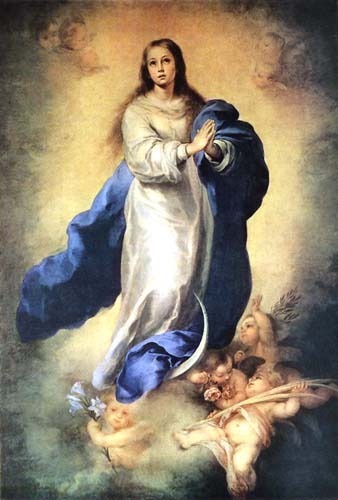
Immaculate Conception, Murillo, 1660

When Pope Pius IX defined the dogma of the Immaculate Conception of the Blessed Virgin Mary (Ineffabilis Deus, 1854), he was enshrining for all time a belief which had already been held for well over a thousand years.

The biggest misconception (no pun intended) regarding the Immaculate Conception is to confuse it with the Annunciation. Today’s feast refers to the conception of Mary herself, not the conception of Christ as announced by the Angel Gabriel. It may seem that the choice of the Annunciation as today’s Gospel is a curious choice then; surely it will just encourage confusion. However, as we will see, that beautiful interaction tells us not just about Mary’s future, but also reveals something crucial about her past.

Mary’s conception and parentage are not described in the Gospels (though ancient tradition gives her parents’ names as Joachim and Anne, whose feast day is the 26th of July.) What we know of Mary from the Gospels is that she became the Theotokos – a Greek term usually translated as ‘God-bearer’, or more familiarly, ‘Mother of God’. Neither of these translations quite do the term justice however; because the first implies that Mary was simply a tool which God used, in the way one would ‘bear’ water in a jug, whilst the second emphasises the humanity of Christ over his divinity. To the early Church, the term Theotokos referenced her privileged role, whilst emphasising the combined humanity and divinity of the person of Christ (the ‘hypostatic union’.)

That last sentence sums up how we should consider Mary’s example, and to a lesser extent all of the saints. We refer to them in order to emphasise aspects of the God we worship. We consider their example and ask their intercession in order to bring ourselves closer to God. In our Lady’s Immaculate Conception we see the infinite goodness of God as salvation history approached its high point in the Incarnation, and ultimately the Death and Resurrection, of the Lord.

The first reading at Holy Mass today is the account of the sin of Eve and the consequence of Original Sin for all of her descendants. It is easy to see in this passage the vengeful God one often expects of the Old Testament, but even here God shows his immense love and his ultimate plan for salvation. Both Jews and Christians see in this passage the first prophecy of the Messiah:

“I will make you enemies of each other: you (Satan) and the woman (Eve/Mary), your offspring (sin and death) and her offspring (Christ). It (Christ) will crush your head and you (sin and death) will strike its heel.”

The place of Mary, the new Eve, in opposing Satan in a way which the original Eve could not, dates back to at least St Justin in the mid-second century. So what set Mary apart from Eve, and indeed every other woman ever born? For the answer to this we must refer to today’s Gospel, and arguably the most commonly spoken Christian prayer.

The word angel means ‘messenger’; they speak on behalf of God. In greeting Mary the Angel Gabriel said, “rejoice, so highly favoured! The Lord is with you.” Perhaps a more recognisable translation would help: “Hail [Mary], full of grace. The Lord is with thee.” It is a shame, in my humble opinion, that the translation used in the Lectionary varies so much from the Latin and Greek here: ‘gratia’ should clearly be translated as ‘grace’; and ‘ave’ is a greeting, not a suggestion to ‘rejoice’. The original Greek makes this even clearer: it uses a verb meaning ‘endow with grace’ (κεχαριτωμενη/kecharitomene) in the perfect and passive, which means that the Angel did not bestow God’s grace upon Mary there and then, but that she had always had the graces needed to lead her to this point and those needed to fulfil her role from this moment onwards. Our answer then is that Mary was possessed of graces that no other human, before or since, has been given. This is what we affirm every time we say the Hail Mary: She was truly full of grace.

While the Council of Trent (1545-63) had acknowledged that Mary was graced with a life free from sin, Pope Pius IX clarified the Angel’s words as meaning that Mary was also free from the Original Sin caused by the sin of Eve. This immaculate nature – an existence without stain or blemish, was necessary for her to be the Ark of the New Covenant, the Mother of God, the Theotokos.
A voice cries in the wilderness

John the Baptist has been a sadly under-rated saint in recent times. He was in his father’s words as recorded in Luke’s Gospel: “a prophet of God the most high,” he “went ahead of the Lord, to prepare his ways before him.” He was the fulfilment of part of the prophecy of Isaiah – the voice which cries in the wilderness, “prepare a way for the Lord, make his paths straight.”

An ancient hymn of John the Baptist called Ut Queant Laxis contains a wonderful musical nod to his role as the fore-runner of Christ. Each successive phrase in that hymn begins a note higher than the last, escalating higher and higher, just as the scriptures see John the Baptist being the sign to something higher than himself – the Lord who was to come.

For the musicians among us, that same hymn is the origin of the solfege scale made famous by the Sound of Music – do, re, mi, fa, sol, la, ti, do. Perhaps take a moment to remember St John the Baptist over Christmas if you find yourself one afternoon watching the inevitable showing of Julie Andrews and the Von Trapp children prancing around an Alpine meadow.

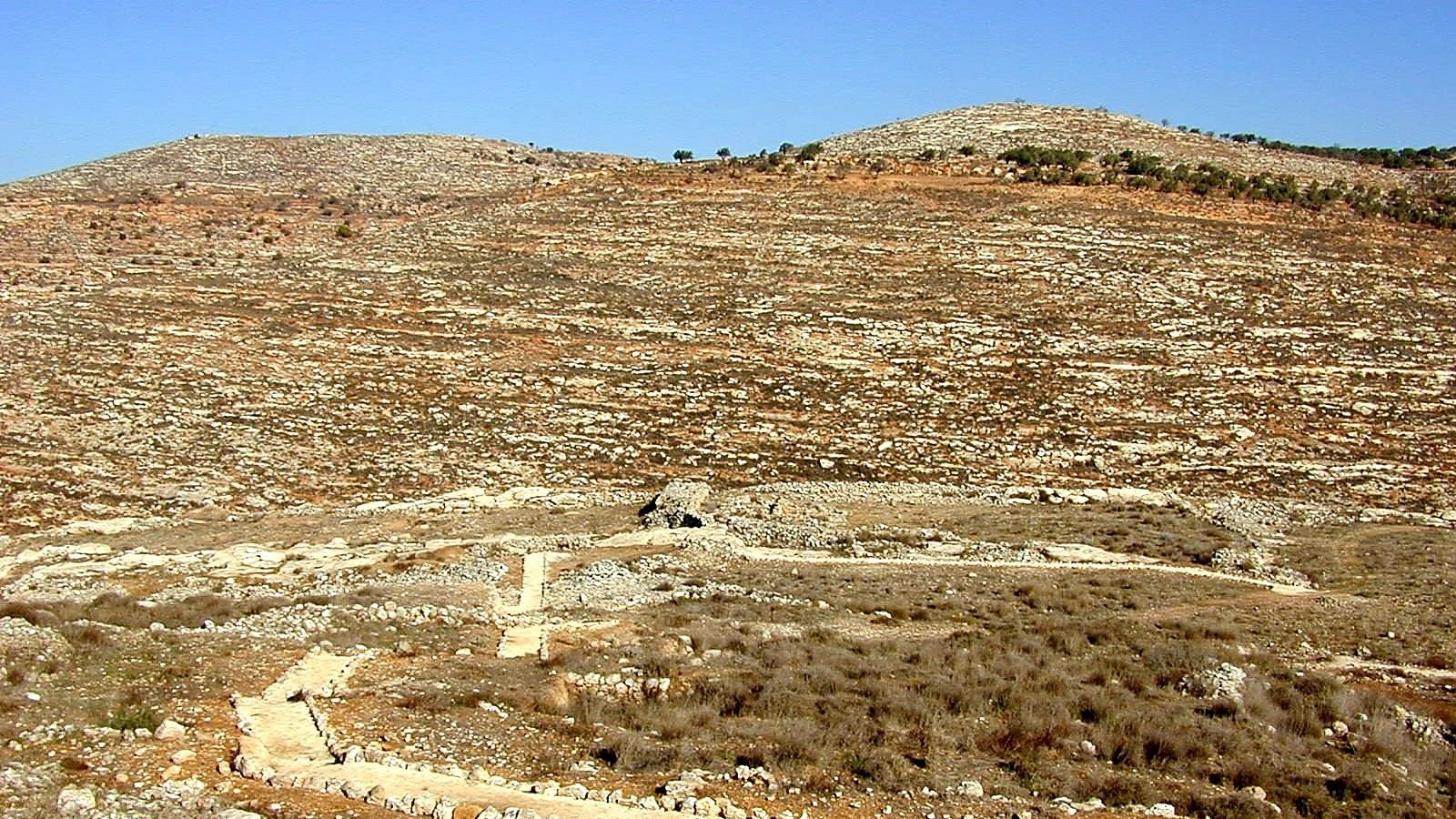
We should see John the Baptist as a great prophet and saint of the Church. And in him we should see an example to us in our day. When you think of when you imagine the wilderness in which John lived? What do you picture? What comes into your mind’s eye? Perhaps a desert or a vast empty plain. More important than the image – is anything happening there? Probably not. Perhaps at most a whisp of sand blowing in a breeze or a camel baying in the distance?

But in truth the wilderness of the holy land is not a calm and peaceful place. It gets extreme heat in the day and cold in the night. Strong winds drive sandstorms that will scour the skin. There is a real danger of starvation or thirst. There are animals that will kill you; some obviously, like wolves, others subtly, like snakes and scorpions. Yet despite all this John managed to live a good and upright life.

Our secular world is very much a spiritual wilderness, and like the literal wilderness of John the Baptist there are many threats to our living good and upright lives:

Individualism – seeing ourselves above all else.

Materialism – seeing possessions as the most important thing in life.

Consumerism – finding happiness almost exclusively in the purchase of goods.

We can all see some of these things in ourselves at times, I’m sure; and it is very easy to get caught up in them as we get ready for the Christmas festivities. Of course, it is right to celebrate the Incarnation and keep the great feast of Christmas as a joyful occasion. But in the next few weeks as you prepare for those celebrations, also remember to follow the example of St John:

Do not be afraid to be a voice that cries into the spiritual wilderness of our world. Do not be afraid to tell people of Christ, of the real meaning of Christmas, of his death and resurrection, of the redemption of the world. If we all do this, proudly and fiercely, then truly, in the words of Isaiah, “all mankind shall see the salvation of God.”

A new year, a new hope

First Sunday of Advent 2022 (Year A)

All of my family either love, or have at some point loved, the children’s toy Lego. A few years ago, my wife and I took our children to Legoland Windsor to stay for a night in one of their hotels, as part of my daughter’s birthday celebrations. We didn’t tell the children where we were going or what for; we just bundled them into the car not long before dawn and headed off on the motorway. As we drove, the slowly lightening sky gave way to dawn and the children’s eagerness for the adventure grew. We kept the secret right up to the moment we pulled into the park and saw the sign topped by giant Lego bricks. At this point there was smiling and bouncing all round in the back seat, and as those who are parents will know, there is nothing better than seeing unadulterated happiness on the faces of your children. It was a very, very good trip.

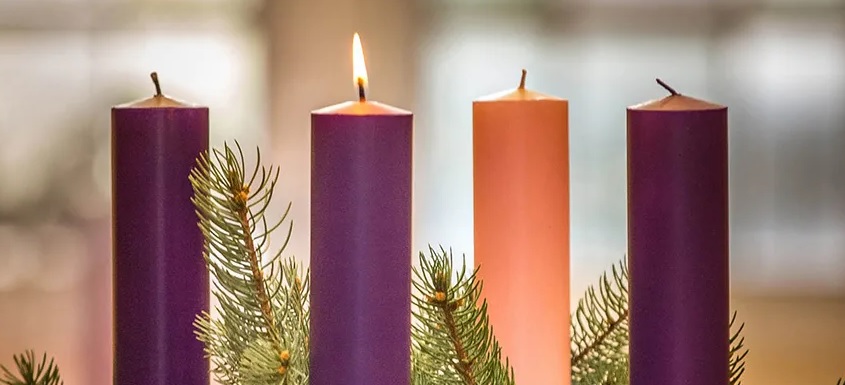
That trip began a new year of my daughter’s life. Today, the First Sunday of Advent, we open a new year in the life of the Church. We begin in a similar way – we have been roused in the darkness and started onto our Advent journey. In the words of our second reading, ‘the night is almost over, it will be daylight soon.’ Nowhere is this beautiful analogy of darkness giving way to light clearer than in the Rorate masses of Advent. If you have the chance to attend one or more of these masses this Advent, I strongly recommend them. They take place in the darkness immediately before dawn, and if timed right one enters the church in darkness, with candles often providing the only light, and then leaves into the brightness of the winter’s morning.

Unlike the children though, we know the wonderful end of our journey: Christmas, certainly, and our great commemoration of the Incarnation; but in these first weeks of Advent, we consider in a particular way the coming of the Lord at the end of time. Our Gospel contains stark language from Jesus: ‘of two men in the fields one is taken, one left; of two women at the millstone grinding, one is taken, one left.’ Jesus is not suggesting a fifty-fifty split; he is explaining that there will be a suddenness to his return.

There is an old episode of the Simpsons, in which Bart explains to a minister that he was hoping to live a life of sin followed by a ‘presto-chango death-bed repentance.’ The minister argues that living a good life means he receives ‘full coverage’ in the event of a sudden death. It is the Simpsons, so it is all a bit blasé; but this is what we seek when we pray to avoid ‘an unprovided death.’ We are called in our Gospel and second reading to seek the ‘full coverage’ of a holy life, not just to avoid an unprovided death, but also to avoid being unworthy should the Lord return during our time on earth.

It is no secret that the early Church expected the Lord to return imminently – there is a satirical religious cartoon which portrays the Apostles running a book and taking bets on the date that the Lord will return before his feet have even disappeared into the clouds above them. The word imminent is an interesting one – its origin comes from a Latin word (mineo) which means to project over, or to overhang. The same root gives us the English word menace. In a sense the return of the Lord is menacing – it will come ‘at an hour [we] do not expect;’ and if we are not ready then yes, we should be concerned about that. But we can be prepared for it.

We can be Baptised; receive regular absolution in the sacrament of Confession; we can be with the Lord personally in Holy Communion and at Adoration. In the words of the Penny Catechism, the sacraments are ‘outward signs of inward grace.’ It is the graces received from the sacraments that allow us to ‘live decently,’ as St Paul describes it. We can put on the armour of Christ and bring about the world that Isaiah describes in our first reading; a world where ‘all the nations will stream… to the Temple of the God of Jacob.’

The first part of Advent is not seeking to cause an anxiousness in the faithful. It encourages us to reflect on what is really important as a Christian: our relationship with the Lord. To foster in our hearts his message and his promise to us; that we will one day ‘walk in the light of the Lord’ if we will but take up our cross and follow him.

As we begin this journey through the darkness of Advent, our anticipation and excitement will rise as we approach the celebration of the Incarnation. Let us also remember that we are journeying to the Lord’s second dawn too. As we make our worldly preparations, let us always conduct ourselves in such a way that we need have no fear of that day.

Collect from Mass on the First Sunday of Advent:

Grant your faithful, we pray, almighty God,
the resolve to run forth to meet your Christ
with righteous deeds at his coming,
so that, gathered at his right hand,
they may be worthy to possess the heavenly kingdom.
Through our Lord Jesus Christ, your Son,
who lives and reigns with you in the unity of the Holy Spirit,
one God, for ever and ever.

Christus Vincit, Christus Regnat, Christus Imperat

Christ the King 2022 (Year C)

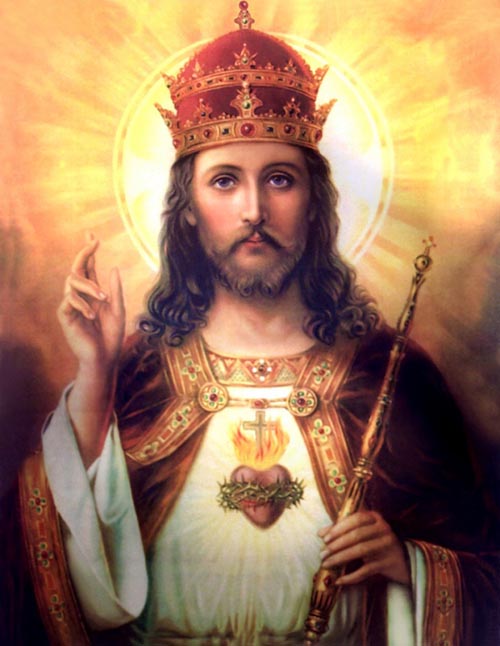
The words Christus vincit, Christus regnat, Christus imperat – Christ conquers, Christ reigns, Christ commands, are carved into the obelisk which stands in St Peter’s Square in the Vatican. That obelisk was placed there by Pope Sixtus V in 1586 as an eternal memorial to Christ the King.

Obelisks carried connotations of the divine from their earliest days. To the Egyptians the shape of what they called a tekhenu was reminiscent of the benben – the mound on which their creator god stood during the creation of the world; the living deity that was their Pharoah, and curiously, a bird which represented both the beginning and end of the world. Today’s second reading makes it clear that the Lord is eternal; “before anything was created, he existed.” He will be there too at the end of all things, the Lamb of St John’s Revelation. The Lord is the living God, “consubstantial with the Father” in the Holy Spirit. As such he is the fulness of revelation and the aim of human faith.

To the later Romans the Egyptian obelisks took on a different meaning. They were removed to Rome and erected as monuments to the victories of the god-emperors. The obelisk which stands in the Vatican carries an echo of this meaning even to this day. It was first transported to Rome by the emperor Caligula and placed outside the great circus he had built on the site where St Peter’s Basilica now stands. When it was moved in the sixteenth century to its current position it was exorcised and blessed as monument to Christ’s victory over even the most influential secular powers.

Today’s Gospel may seem an odd choice for today’s feast; but it has two important messages for us as we consider the sovereignty of the Lord. Firstly, it reminds us that Christ’s kingship extends far beyond what we can understand. His promise to the good thief that “today you will be with me in paradise,” is more than a promise of heaven. It shows the Lord’s authority to promise heaven. Anyone can say the words of a promise, but without the power to fulfil that promise, it remains only words. As Christians we take the Lord’s authority to fulfil his promise as an essential part of our faith – he is the Word made Flesh, Truth Incarnate; in the words of a hymn by Thomas Aquinas, “Truth himself speaks truly, else there’s nothing true.” Christ’s authority then, extends not just to the miracles and wonders he worked in our world, but unto the end of time and beyond, to the paradise which awaits all the faithful.

Secondly, the crucifixion is given to us today as a reminder that all authority in heaven and on earth has been given to him precisely because of the Cross. Even as mankind committed deicide, the greatest of sins, he felt nothing but love, offered nothing but redemption. His is not the kingship of a tyrant, ruling by fear and oppression, but one of charity and benevolence. As Catholics we understand every mass as making present the sacrifice of the Cross; at each Eucharist the Lord comes to us as his Body and Blood. As we attend mass this Sunday and behold the elevated host and chalice, let us share in the prayer of the good thief, “Jesus, remember me;” and be assured that in his divine majesty, he will.