Homily for the 25th Sunday in Ordinary Time, Year A: I want to be perfect!

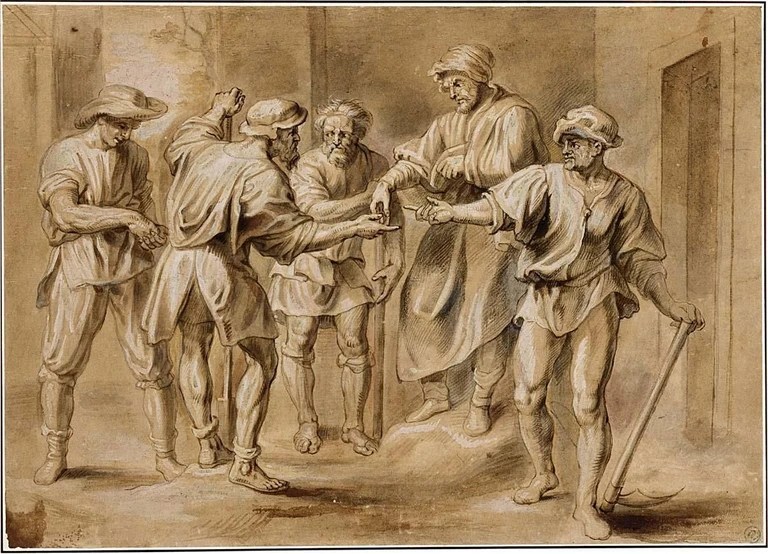
Workers in the Vineyard of their Master by Erasmus Quellinus

Audio Recording:

Text:

You may be familiar with the TV programme Gogglebox, but for those who aren’t the premise is that various videos are shown to groups of viewers, and their reactions are recorded. I can’t claim to be a regular watcher, but I would very much like to see a Catholic edition of Gogglebox, in which we get to see people’s reactions as they hear the messages of the Gospel for the first time.

I suspect today’s parable would be a hit on a programme like that. It’s hard not to find ourselves thinking ‘do you know what, fair play to the whole day’s workers for moaning – they had done the full day’s work after all.’ People on the show might be nodding their heads in agreement, only to find themselves with furrowed brows and perplexed expressions when the landowner calmly explains that those workers got exactly what was promised. The only thing that could be being criticised here is his generosity, and generosity’s a good thing, surely?

In a time when we are very aware of social justice, this parable really can seem unfair; but we need to remember that it is just that – a parable. The examples used in parables are illustrative – the message of The Good Samaritan is not limited to mugging victims, nor is the Parable of the Ten Bridesmaids about the logistics of owning oil lamps. In the same way, we must not read an earthly sense of fairness into today’s message – the pay received by all represents eternal salvation, and what could we possibly hope for beyond that?

The first failing of the workers then, is that they see long-service as entitling them to more than those who took up the landowner’s offer at the eleventh hour. It would be easy to use the words of our first reading to explain God’s mercy as being a thought beyond our comprehension, but it is worth remembering here that Matthew was writing his Gospel for a Jewish audience; and as we heard in the Gospel of his Feast Day this past Thursday, the Jews generally were far from keen on embracing anyone that they did not believe was part of God’s chosen people. In fact, this parable is only recorded in Matthew’s Gospel, perhaps he intended it as a thinly veiled message that those who come to God through his Christ are just as entitled to his mercy as those who followed the Law of Moses. On our shorter time scales, of course, we must remember that having been Christian for a lifetime does not entitle us to more than a death-bed convert. There are no VIP rooms in heaven, and it would be vanity to hope for such.

This brings us neatly to the other failing of the workers in our Gospel – their selfish sense of their own value. Being made in the image and likeness of God, we do of course have an innate dignity and worth; but forces in today’s society have managed to corrupt this ideal. I love rugby and I’ve been watching a great deal of the World Cup in recent weeks. Many of the advertisements shown in those programmes are typical of exactly this corruption. One of them in particular barely advertises a product, instead it glorifies the message that as long as we are doing what we want to do, nothing else seemingly matters. This is not the Christian understanding of individual worth and value. We are called to embrace our distinctiveness, within the Gospel message; and then to place it at the service of others – St Paul understood this in our second reading. He longed to die and reach his eternal reward, but he also knew that, in his words, “living in this body means doing work which is having good results.” Those good results were most apparent in the lives of others, not in his own.

Another of those adverts is for the British Army, with its tagline “be the best”. But if you told me that I was the best person, the best Christian in this church this morning, I would not be pleased. To aspire to being the best means to embrace life as a competition with others, and as long as I am better than them, I can be happy. For the army it make sense as a slogan; in war being better than your opponent is what keeps you and your comrades alive. Being the best is enough in their profession. But you and I won’t get to heaven simply by trying to be better than everyone else.

To put it bluntly, being the best isn’t good enough; it isn’t what being a Christian is about. I don’t want to be the best. I want to be perfect – perfect enough to spend eternity in the presence of my God and Lord. With the grace of God I will get there; but I fully expect, like Gerontius in St John Henry Newman’s famous epic, that I will have to beg my guardian angel for the purification of purgatory when the time comes.

But that’s not me trying to ‘be the best;’ because I want that same perfection for every single one of you, from the youngest child who hears this to the oldest pensioner. And beyond that, I wish it and pray it for all of humanity in every age of the world. That is what it means to be a Christian. I can be me, and you can be you, but we can do it selflessly and still live the lives that God wants for us. Life is not a contest. We can, all of us, attain perfection, in this world or the next. And we know that we can do it because, in the words of the psalmist today:

            The Lord is kind and full of compassion…
            He is close to all who call him,
                        Who call on him from their hearts.
Homily for the 19th Sunday in Ordinary Time, Year A: Creation itself obeys the will of God

Audio Recording:

Text:

The recent success of the film Oppenheimer has drawn the public consciousness to some of the great, and at times terrible, discoveries of the first half of the twentieth century. Those discoveries of course, stemmed from attempts to understand a very base question of our existence: ‘what is stuff made of?’

The ancient understanding of the elements was of course very different to that of Oppenheimer and his contempories. In the time of Christ, the answer that everything is made of Earth, Air, Fire and Water (and later Ether) was broadly accepted among those who cared to ask such questions.

Water and Fire were understood as the extremes of the elements. Where Earth and Air were relatively passive, Water and Fire had the capacity to destroy and to take life. Water in particular had that reputation to the Jews – both for the disciples themselves and for the Jewish audience that St Matthew wrote his Gospel for. One might consider the Flood and Noah’s Ark in Genesis, the storm that turned back the prophet Jonah, or the destruction of Pharoah’s army in the Red Sea – these stories were well known. Yet all those familiar stories have something in common besides an awful lot of destructive water. They all make clear that the seas; the elements themselves; creation itself; obeys the will of God.

These stories were then reflected in the psalms that Jesus and the disciples would have prayed daily. Psalm 89 says: “Who is like you, LORD God Almighty? … You rule over the surging sea; when its waves mount up, you still them.” And in another psalm: “The LORD stilled the storm to a whisper; the waves of the sea were hushed.” The word translated as LORD in both of those psalms refers the Holy Name of God; sometimes translated as I AM, in Greek ego eimi. Jesus’ use of that phrase is more often associated with St John’s Gospel, but it is exactly the phrase that Matthew records in today’s passage, translated for us as ‘It is I’. To the Jewish disciples, Jesus’ words identify him both as the man they know, but also as God.

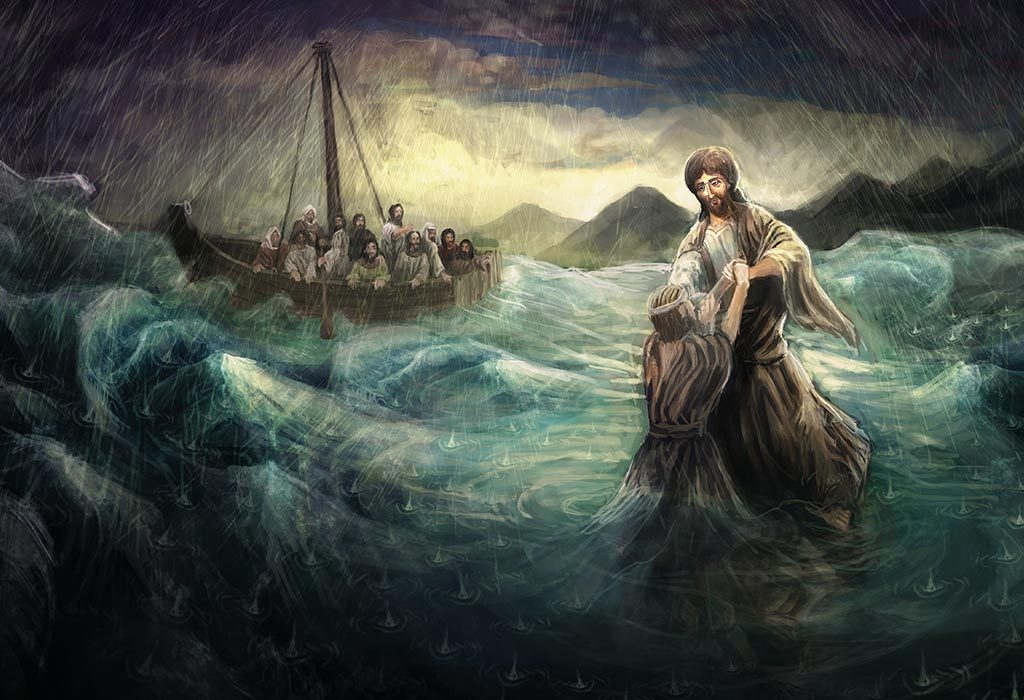
Peter steps out of the boat, and with his eyes fixed on his friend, his friend who has just identified himself as God, walks across the water; but as soon as his mind is drawn from God by the wind and the storm, he begins to sink. The Lord reaches out to him and brings him back to the boat, at which point the wind and the heavy seas calm instantly. Creation itself obeys the will of God.

In all of this we can draw a multitude of analogies: Perhaps we recognise in the disciples’ boat the Barque of Peter – that ancient allegory of Mother Church herself. Perhaps we see ourselves as Peter, needing to keep our eyes on the Lord and avoid the distractions of the material world; or perhaps we see ourselves as one of the others in the boat, wishing we had Peter’s confidence in calling out and his faith in taking those first steps. Perhaps we feel ourselves sinking right now, and long for the Lord to reach out and lift us up; or perhaps we happily feel that the Lord has recently calmed the waters of our lives.

Regardless of where we might consider ourselves in that story, this final thought, I hope will be relevant. It stems from my reflections in the parish Lectio group last Monday morning; and as we reflected on this scripture the phrase that jumped out at me was: “In the fourth watch of the night.” That would be between three and six in the morning – the Lord had left them in their struggle against the wind from the evening-time all the way through to the hours before dawn. That was more than enough time to reach their destination on the far shore, had the weather been favourable, and yet they had done nothing but struggle on without him.  

Sometimes we struggle, just like the disciples in the boat. Sometimes the Barque of the Church herself appears to be merely struggling along in a hostile world. Sometimes it can feel as though the stresses and worries of the world, even the very fabric of the world – the elements themselves, are conspiring against us. What today’s Gospel shows us is that the Lord will always be there for us in those trials. Not as we expect necessarily – the disciples’ did not expect to see him walking on the sea, perhaps not even as we would like him to be – the disciples could have done without that sleepless night fearing for their lives, I’m sure; but he will be there when we truly need him. All we need to do is endure the trials, the crosses, which in his wisdom he sends to us and be willing at the appointed time to cry out in the words of Peter: “Lord! Save me!” Because at those words he will surely reach out and bring us to safety, for nothing is impossible for him – even Creation itself obeys the will of God.

Homily for the 13th Sunday in Ordinary Time, Year A: What are you?

Audio Recording:

Text:

Many of us will have experienced at some point what is best described as a corporate icebreaker. The sort of affair where a group of people have gathered, usually in a circle, and to begin to get to know one another each person is asked to speak in turn, with some generally innocuous details about themselves and their lives. Some people hate these tasks, some don’t mind them; I’ve never met anyone who admitted to actually liking them!

You’ll be please to know that I’m not going to go around asking anyone, but I would like you to try one of the common icebreakers in your own mind. Sometimes people are asked to try and describe who they are in five words; not a sentence – they can be unrelated words. But I am going to change one part. I would like you to think for just a few moments not about who you are, but about what you are. So let’s take a few seconds of silence: In no more than five words – how would you describe what you are.

Whatever words came to you in those few seconds, try to hold on to them in your minds.

I had a bit of time to reflect on that question in preparing for this homily, so I’m going to take myself as an example. The words I settled with are : I am a Christian, a Husband, a Teacher, a Father, and a Deacon. Of course, once we have our words in mind, if we are to share them then we have to settle on the order that we’re going to say them in. Perhaps just the order they popped into our heads? I gave mine in chronological order – I was baptised as a Christian as a baby; I got married when I was twenty; became a teacher straight out of university; a Father a couple of years later; and a deacon just under a year ago.

But what if we try to put our words into an order according to their importance to us? Try it in your minds with some of your own words. It’s difficult. It’s very difficult. In fact it’s so difficult that we may not ever be able to find an answer we are happy with. Is it more important to me to be a deacon or a teacher? A father or a husband? My wife and children heard this homily on Sunday morning and it led to a few interesting questions when I got home!

What we are presented with in today’s Gospel seems at first glance to be a very difficult teaching of Jesus’. He says “anyone who prefers father or mother… son or daughter to me is not worthy of me.” Wow. What he’s saying is that whatever else we are, and whatever order of importance we might settle on for the other things, being his disciple, being a Christian, must come first.

What he’s not saying of course, is that we should not love being the other things too; but he does insist on our belonging to him first.

To understand these difficult lines we must remember that this person speaking, this man, Jesus, is the Word of God in the flesh. This is what we acknowledge in the Creed. We say also that “through him, all things were made.” All things, not just the concrete nouns, if you’ll pardon the grammatical term; not just the rocks and the air and the trees and the squirrels. All things – including ourselves; including our nature to procreate and raise children; to teach one another; to undertake marriage or to receive holy orders. All of that comes from him. In fact, there can be no word in your mind that cannot be traced back to him, because everything that you are, you are because of him and his plan for you.

So being his first is not a bad thing. Being his first makes us better at everything else. If you recognised yourself as an artist, you will be a better artist if you appreciate that the things you paint are his handiwork; if you are a nurse, you will be a better nurse if you see him in the face of every patient; if you are a scientist, you will be a better scientist if you realise that it is his creation that you seek to reveal.

For my part, I truly believe that I am a better husband, because I am his; I am a better father, because I am his; I am a better teacher, because I am his; and, frankly, I would be a pretty useless deacon if I was anything but entirely his.

In short, if the person of Jesus is anything at all to us, he must be everything to us.

Homily for the Third Sunday of Lent, Year A: The Woman at the Well

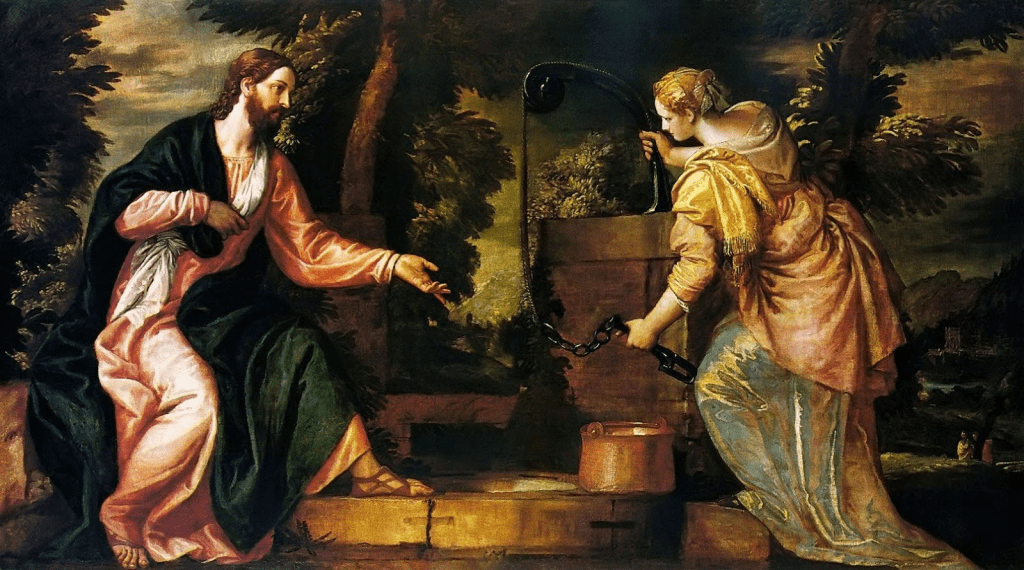
Samaritan Woman by Paolo Veronese, Kunsthistorisches Museum, Vienna, Austria 

One of the criticisms often levelled at the Catholic Church is that we do not read enough of the Bible. The length of today’s Gospel might suggest otherwise, and this was the shortened account!

[For the reader: A reference to the passage used is given at the end of this text.]

The criticism is not entirely unfair however, and while we will never embrace the sola Scriptura, Scripture alone approach of Protestantism, it is a fair question to ask – when and how do we read and reflect on the Word of God?

One approach is Lectio Divina, a process in which a piece of Scripture is read three times, with a period of reflection between each. It is all very contemplative, allowing a word or phrase to jump out at us; that is the word or phrase which we are then called to consider the importance of, for ourselves and in our lives.

Each person brings their own personality to this sort of reflection, and I find that my curious nature is often drawn to the little details: Why did the writer choose to include that – what is the importance of an often apparently trivial detail. When I was reflecting on today’s Gospel, my attention was drawn to a couple of things:

John’s Gospel wasn’t written by him personally, but by a community of his followers. Those followers would have memorised his stories and teachings word for word, after the Rabbinic traditions of the time; but why did John insist that they remembered that this meeting happened at the sixth hour, or include the snippet that “Jews, in fact, do not associate with Samaritans?”

It is no secret that the Samaritans had a long history of conflict with the Jews. They were the remnant of the Northern Kingdom of Israel, with the Jews being the remains of the Southern Kingdom. They had freely intermarried with non-Israelites, and as we hear alluded to in the Gospel, they worshipped God at this mountain, called Gerizim, rather than at Mount Zion – the Temple Mount of Jerusalem. Worse still, the Samaritans had opposed the rebuilding of the Temple in Jerusalem after the Babylonian exile, and the Jews had destroyed the Samaritans’ Temple in turn. It’s safe to say that while the Jews looked down on the Gentiles – the non-Jews, they openly hated the Samaritans.

And what of this sentence “it was about the sixth hour?” The daytime was divided into twelve hours, so the sixth hour refers to the middle of the day, the hottest part of the day; and here was this woman alone at the well. Water would have been collected by the women in the early morning, when the day was cooler and the walk back to the city less arduous. So what was she doing there in all that heat?

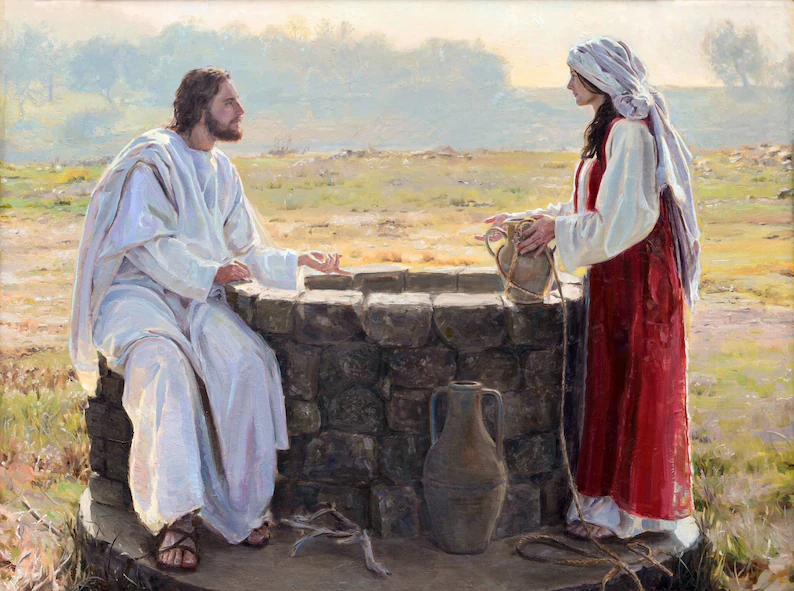
Jesus Christ and the Samaritan Woman at the Well by an unknown artist, Church History Museum, Salt Lake City, USA

Another thing that often catches my eye with the readings at Mass is when I look at the reference at the top of the reading and there are verses missing. In this shortened version, what was said in verses 16-18, and 27-38? The first of those gaps is significant here – Jesus tells this woman something about herself that he should have had no way of knowing – that she had had five husbands, and was now with another man who was not her husband. This is why she calls him a prophet, and later says “he told me all that I have ever done.” It is also very likely the reason that she was disliked by the other women of the city, so much so that she had to come to the well alone at the sixth hour – in the heat of the midday sun.

This all adds up to a woman who was as despised as it is possible to be – excluded by her own people, and they themselves a people who had been shunned for centuries by Jews; Jews like Jesus.

And yet the Lord offers her, even her, living water and eternal life. There is hope for all of us, I think.

But she doesn’t just take from the Lord; she passes on what she has received. Think of those you consider to be credible sources of information – are any of them outcasts like this woman? I suspect probably not. Yet the zeal with which she spoke of the Lord when she returned home inspired those in the city to welcome him and to believe.

That same living water, that same eternal life, is offered freely to every human soul, to every one of us. All we have to do this Lent is turn to him, worship him in spirit and in truth, and he will grant us everything that he promised to the woman at the well; and what is more, we will be filled with the same intensity that caused her, an outcast of outcasts, to speak so fervently, and with such conviction, of the Good News of God.

Gospel Passage for the 3rd Sunday of Lent, Year A, Shorter Form: John 4:5-16, 19-26, 39-42

A new year, a new hope

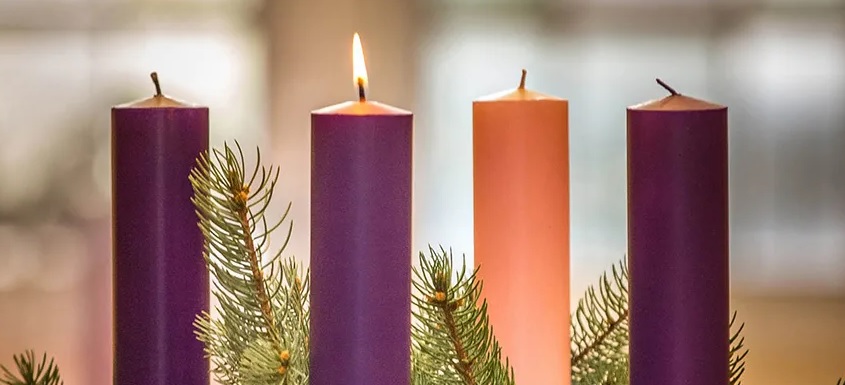
First Sunday of Advent 2022 (Year A)

All of my family either love, or have at some point loved, the children’s toy Lego. A few years ago, my wife and I took our children to Legoland Windsor to stay for a night in one of their hotels, as part of my daughter’s birthday celebrations. We didn’t tell the children where we were going or what for; we just bundled them into the car not long before dawn and headed off on the motorway. As we drove, the slowly lightening sky gave way to dawn and the children’s eagerness for the adventure grew. We kept the secret right up to the moment we pulled into the park and saw the sign topped by giant Lego bricks. At this point there was smiling and bouncing all round in the back seat, and as those who are parents will know, there is nothing better than seeing unadulterated happiness on the faces of your children. It was a very, very good trip.

That trip began a new year of my daughter’s life. Today, the First Sunday of Advent, we open a new year in the life of the Church. We begin in a similar way – we have been roused in the darkness and started onto our Advent journey. In the words of our second reading, ‘the night is almost over, it will be daylight soon.’ Nowhere is this beautiful analogy of darkness giving way to light clearer than in the Rorate masses of Advent. If you have the chance to attend one or more of these masses this Advent, I strongly recommend them. They take place in the darkness immediately before dawn, and if timed right one enters the church in darkness, with candles often providing the only light, and then leaves into the brightness of the winter’s morning.

Unlike the children though, we know the wonderful end of our journey: Christmas, certainly, and our great commemoration of the Incarnation; but in these first weeks of Advent, we consider in a particular way the coming of the Lord at the end of time. Our Gospel contains stark language from Jesus: ‘of two men in the fields one is taken, one left; of two women at the millstone grinding, one is taken, one left.’ Jesus is not suggesting a fifty-fifty split; he is explaining that there will be a suddenness to his return.

There is an old episode of the Simpsons, in which Bart explains to a minister that he was hoping to live a life of sin followed by a ‘presto-chango death-bed repentance.’ The minister argues that living a good life means he receives ‘full coverage’ in the event of a sudden death. It is the Simpsons, so it is all a bit blasé; but this is what we seek when we pray to avoid ‘an unprovided death.’ We are called in our Gospel and second reading to seek the ‘full coverage’ of a holy life, not just to avoid an unprovided death, but also to avoid being unworthy should the Lord return during our time on earth.

It is no secret that the early Church expected the Lord to return imminently – there is a satirical religious cartoon which portrays the Apostles running a book and taking bets on the date that the Lord will return before his feet have even disappeared into the clouds above them. The word imminent is an interesting one – its origin comes from a Latin word (mineo) which means to project over, or to overhang. The same root gives us the English word menace. In a sense the return of the Lord is menacing – it will come ‘at an hour [we] do not expect;’ and if we are not ready then yes, we should be concerned about that. But we can be prepared for it.

We can be Baptised; receive regular absolution in the sacrament of Confession; we can be with the Lord personally in Holy Communion and at Adoration. In the words of the Penny Catechism, the sacraments are ‘outward signs of inward grace.’ It is the graces received from the sacraments that allow us to ‘live decently,’ as St Paul describes it. We can put on the armour of Christ and bring about the world that Isaiah describes in our first reading; a world where ‘all the nations will stream… to the Temple of the God of Jacob.’

The first part of Advent is not seeking to cause an anxiousness in the faithful. It encourages us to reflect on what is really important as a Christian: our relationship with the Lord. To foster in our hearts his message and his promise to us; that we will one day ‘walk in the light of the Lord’ if we will but take up our cross and follow him.

As we begin this journey through the darkness of Advent, our anticipation and excitement will rise as we approach the celebration of the Incarnation. Let us also remember that we are journeying to the Lord’s second dawn too. As we make our worldly preparations, let us always conduct ourselves in such a way that we need have no fear of that day.

Collect from Mass on the First Sunday of Advent:

Grant your faithful, we pray, almighty God,
the resolve to run forth to meet your Christ
with righteous deeds at his coming,
so that, gathered at his right hand,
they may be worthy to possess the heavenly kingdom.
Through our Lord Jesus Christ, your Son,
who lives and reigns with you in the unity of the Holy Spirit,
one God, for ever and ever.